
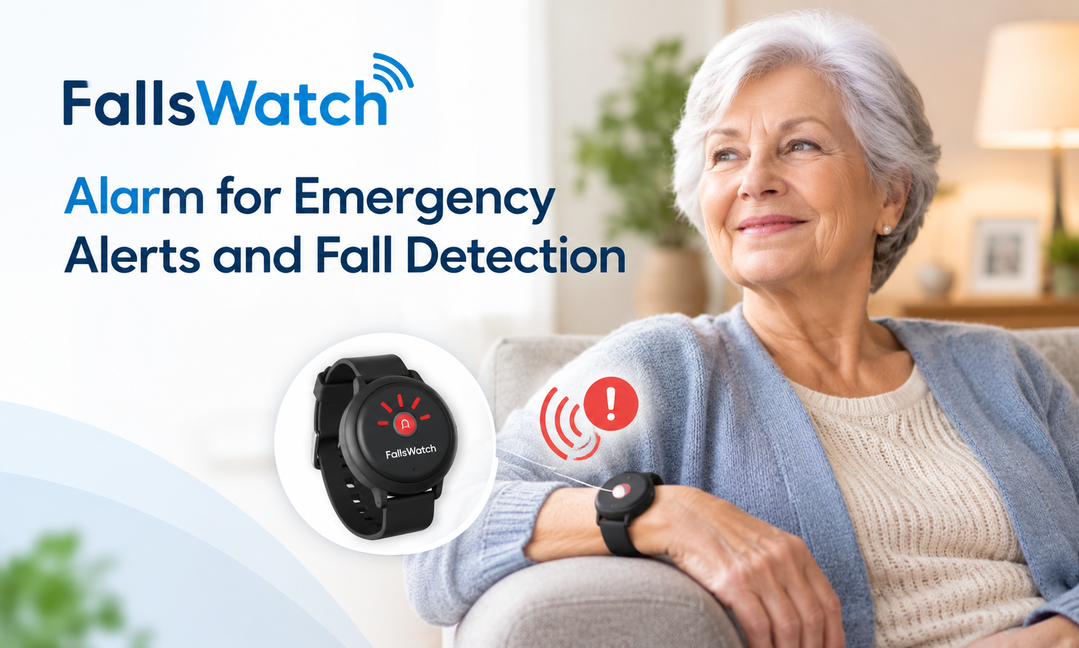
Falls Watch Alarm for Emergency Alerts and Fall Detection
Growing older does not mean giving up the comfort and independence of home. Many Australians prefer to stay in familiar
Proudly Australian Owned & Operated – Want to speak to a real person? 02 7227 5833
Quick emergency assistance can make a significant difference during medical emergencies, falls, or unexpected health events. Modern alert technology makes it easy to get help quickly while giving assurance to both the user and their family members. A smartwatch for elderly users combines simple operation with advanced safety features, making it easier to request assistance whenever needed. The selection of the best medical alert watch with fall detection feature becomes even more important since the alert will automatically be sent in case of a severe fall.
The medical alert button is a built-in system found on wearable devices for emergency use, where the user can seek help using just one button. Its simple design makes it easy to operate, even during stressful moments or when movement is limited. These devices are widely chosen by older adults, people with health conditions, and anyone seeking extra daily protection.
A smartwatch for elderly users offers a convenient way to stay connected to assistance without relying on a mobile phone. Selecting the best medical alert watch with fall detection also provides added security with automatic fall detection, helping users and their families feel more confident about independent living.
The process of using the best medical alert watch with fall detection australia is straightforward and ensures quick access to assistance for the user. Both users and their relatives need to understand this process in case of emergencies.
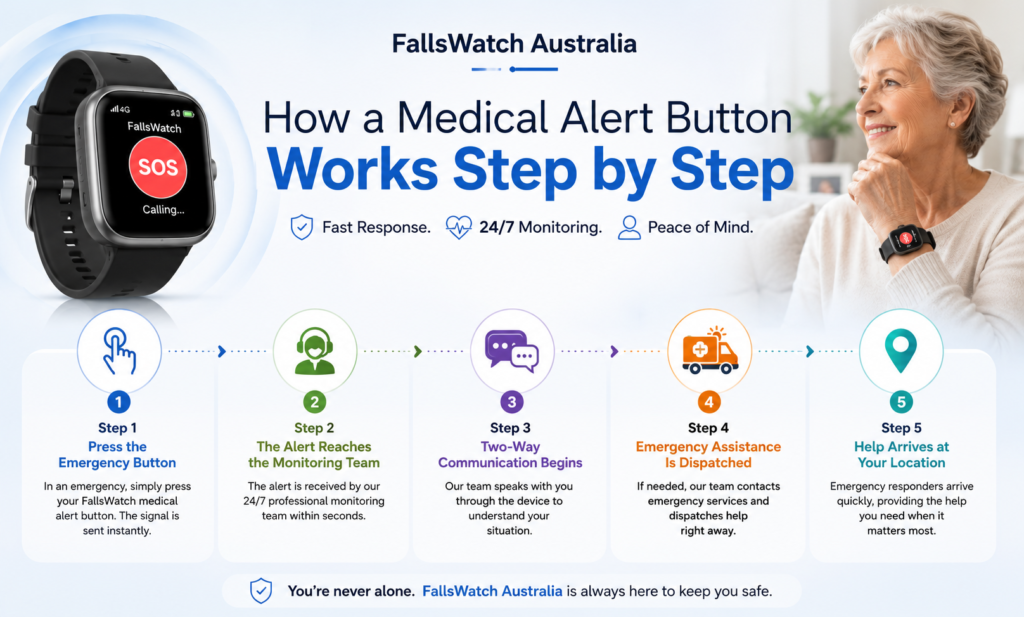
Once the emergency button is pressed, the alert is sent via the device’s communication network to the monitoring team. The system provides information, including the user’s registered data and, if available, their current location. A stable connection is crucial as it ensures that the alert is delivered to the monitoring centre in a timely and reliable manner. When the signal is received, trained personnel start to analyze the information to get an understanding of the situation. This stage establishes a direct connection between the user and the response team.
Upon pressing the emergency button, the device automatically sends out alerts through the communication system, thus enabling it to create a connection to the proper service provider. Even though the technology varies from one device to another, the basic idea behind all these systems is always the same. Therefore, by simplifying the process, the device provides a practical way to request help, especially in situations where using a mobile phone may be difficult or impossible.
After receiving the alert, the monitoring team tries to contact the user via the device. The operator asks simple questions to find out what happened and what help is needed. If the user is able to respond, they can explain their condition and provide information. Moreover, if they cannot speak or do not respond, the monitoring team follows established emergency procedures based on the available information. This phase enables responders to reassure them that support is being coordinated.
The monitoring team evaluates the situation and then plans the most suitable response. They can call emergency medical services, alert a caregiver, or alert nominated family members, depending on the user’s needs. The answer is based on the information gathered in the previous stages, so that the assistance is appropriate to the nature of the emergency. Moreover, the monitoring team ensures that the right resources are deployed to assist as efficiently as possible.
After assistance is called for, emergency responders or designated contacts go to the user’s location. Users should stay calm and follow any instructions given by the monitoring team as far as possible while waiting. Staying in one location may facilitate rapid identification of the user if it is safe to do so. The structured response process is continued until help arrives, providing users with timely support and reassurance during the emergency. Knowing that assistance has been coordinated can help reduce stress for both users and their families.
A fall sensor in watch with fall detection adds an extra layer of protection by automatically detecting serious falls and helping start the emergency response process quickly.
Overall, a medical alert button provides a dependable way to access help quickly during emergencies while supporting safer and more independent living. Choosing the best medical alert watch with fall detection australia ensures users benefit from advanced safety features and full emergency support. Thus, a good watch with fall detection also offers families greater peace of mind, knowing their loved ones can receive timely assistance whenever an unexpected situation arises.
Pressing the emergency button immediately starts the alert process. The device sends a request for assistance and starts to route the user to the right response service for additional assistance.
Monitoring centres are alerted to emergencies, check the information available, and coordinate the actions to be taken. Their job is to make sure that all alerts are dealt with efficiently and channeled to the right help.
Yes, an extra layer of protection is provided by a fall sensor that automatically detects certain types of falls and sends an alert if the user cannot press the button to trigger an alert.
Emergency response time describes the period between an alert being triggered and then response process getting underway. The exact timeframe depends on the device and the circumstances of the emergency.
GPS technology is used to determine a user’s location when they are not at home. However, this information can assist responders or caregivers in finding the user faster in an emergency.
Growing older does not mean giving up the comfort and independence of home. Many Australians prefer to stay in familiar
As seniors continue to value independence, everyday safety becomes an important part of maintaining an active lifestyle. Unexpected falls may