
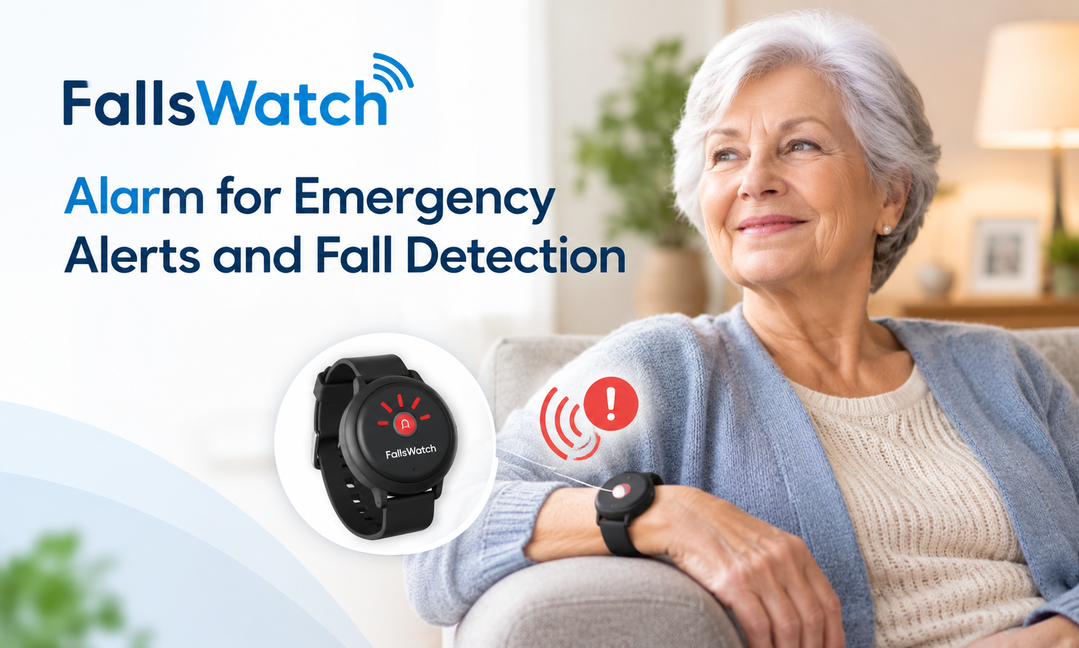
Falls Watch Alarm for Emergency Alerts and Fall Detection
Growing older does not mean giving up the comfort and independence of home. Many Australians prefer to stay in familiar
Proudly Australian Owned & Operated – Want to speak to a real person? 02 7227 5833
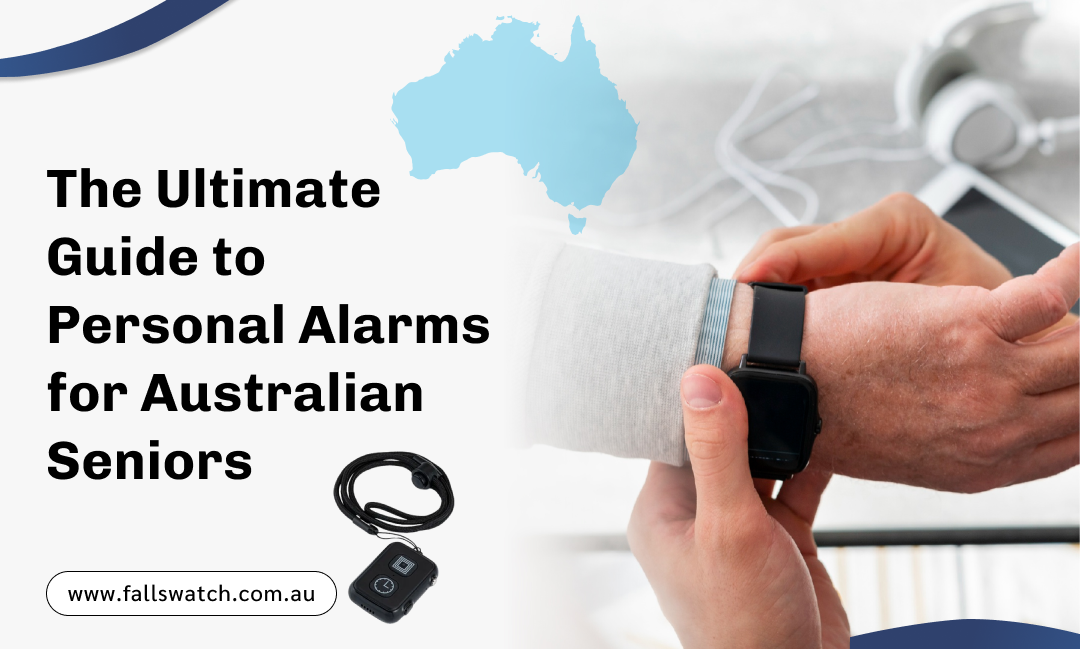
As people grow older, manage health concerns, or experience reduced independence, keeping them safe and supported becomes increasingly important. Personal alarms are among the practical gadgets that enable the elderly to call for help during emergencies, such as falls, with confidence. In this article, we will cover everything you need to know about personal alarms, from how they work to the features that matter most and the many advantages they offer seniors and their caregivers.
The personal alarm is a small device designed so that, when an emergency occurs, one can quickly get help. When the button is pressed, the personal alarm sends a call, an alert, or a message to someone who is supposed to help. These devices are usually worn as a pendant around the neck or as a wristband, and many are waterproof so they can be used in the shower. In modern technology, some alarms have additional features such as automatic fall detection and GPS tracking systems.
Personal alarms play an important role in protecting many people by providing help when needed. The device is useful for senior citizens and people who need greater protection, enabling them to lead independent lives while remaining safe.
Older people are among the most common users of personal alarms, particularly those living alone. The probability of falling, experiencing emergencies or having a sudden illness increases with age. With personal alarms, elderly individuals can live independently without worry, knowing family members can provide immediate assistance if needed. Even seniors without medical conditions can use these alarms, as they can come in handy in unforeseen circumstances.
Individuals who suffer from chronic diseases like heart problems, epilepsy, respiratory issues, and other kinds of diseases will find personal alarms useful in ensuring quick access to aid. Even minor slips can lead to serious injuries, especially when help is not immediately available. Moreover, such illnesses can cause sudden cases that require quick help. Personal alarms provide such patients with peace of mind as they go about their activities, knowing that someone is always available in an emergency.
Those individuals who suffer from any disability that limits their abilities to move, communicate, or think might experience difficulties during the process of escaping from danger. However, the use of personal alarms enables such people to call emergency responders without the need to search for a telephone. Additionally, the alarm can automatically activate fall detection and GPS tracking to ensure no individual is left alone when assistance is most needed.
When recovering from the effects of operations, injuries, and medical treatments, one’s physical condition often remains insufficient to carry out all normal activities. During rehabilitation, there is a possibility of experiencing various health problems or complications. Such an added layer of comfort strengthens safety while reducing stress for everyone involved. Therefore, the use of personal alarms allows one to request medical assistance without delay if feeling uncomfortable or unable to move.
Personal alarms are also highly valuable for caregivers and family members who support elderly or vulnerable loved ones. Many elderly people lead active lives that include walking, gardening, traveling, and other activities. Although they could be fit and capable individuals, accidents could happen at any time without warning. The personal alarm enables such individuals to enjoy an active life with the assurance that assistance will be available whenever they need it.
A personal alarm device should incorporate a combination of safety, reliability, and convenience to enable prompt access to assistance in an emergency. These key components include:
The battery is very critical in providing continuous security. Personal alarms from home use long-lasting batteries that can last a long time without being damaged by making them easy to maintain and use. On the other hand, mobile and watch-like alarms require frequent charging, typically daily overnight. An operational battery ensures the alarm is ready whenever required, minimizing the risk of it not functioning when needed.
The majority of modern personal alarms feature automatic sensors that can detect severe falls and activate alerts. This functionality makes the alarm highly effective for people who are more vulnerable to such events, as the device will send assistance even if the person cannot press the button. Nevertheless, one should remember that it does not detect all types of falls. Falls that occur slowly, involve sliding down or are cushioned by furniture can sometimes go unnoticed.
GPS can help pinpoint a person’s exact location in case of an emergency. Moreover, this is useful when a person is outdoors and unable to convey their location to the rescue team. Even though accuracy may be affected by tall structures, it does play a big role in helping rescuers locate a person. Another thing to consider is that reputable brands only track people via GPS in emergencies.
The ingress protection rating determines how resistant a personal alarm device is to dust and moisture. Ingress protection is represented using two digits; the first one measures the degree of protection from solid objects and dust, while the second measures the device’s resistance to liquids. Higher numbers indicate higher levels of protection. Personal alarms with an ingress protection rating can be safely worn while showering or bathing, as falls are common in these situations.
Selecting an appropriate personal alarm requires considering factors such as health status, lifestyle, mobility, and support needs to ensure safety, comfort and autonomy. Personal alarms should be chosen considering the following:
To sum up, personal alarms for Australian seniors are useful safety devices that promote independence while guaranteeing rapid contact with assistance in times of emergency. The choice of these is based on personal requirements, such as medical conditions, physical ability, lifestyle and financial considerations. Therefore, by choosing the best type of personal alarm and following professional recommendations, one can enhance safety and security.
Growing older does not mean giving up the comfort and independence of home. Many Australians prefer to stay in familiar
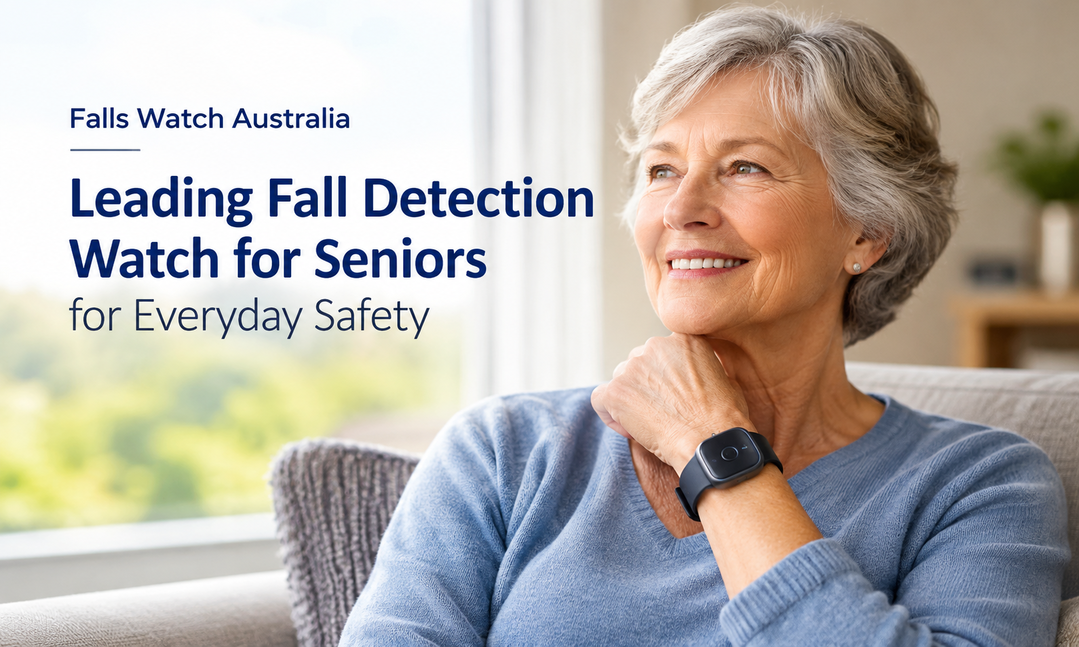
As seniors continue to value independence, everyday safety becomes an important part of maintaining an active lifestyle. Unexpected falls may